Friday, May 2, 2008

Do you know any flamingos?


I work with a lot of professional flamingos in a community college with faculty of many talents and skills.

Julie is a psychologist who consults with the zoo and knows all about meat-flavored toothpaste for bears.

Alicia is a sociologist who teaches belly-dancing in her spare time.

Gerald is a (tall) historian who occasionally stands in as a "wall" in Shakespearean performances.

Donnell is a psychologist who owns and occasionally lectures in a pair of Freudian "slippers."

Mark is an associate dean who wears his hair long, has five daughters, and wins all of our Halloween costume contests.

Steve is an English department chair who worships Buffy the Vampire Slayer.

Dottie is an English instructor knows the value of a nap in the afternoons.

Dakisha is a reading instructor and fantastic dancer.

Gloria is a mathematics instructor and novelist.

Allison is a historian who wears dangerous weapons (disguised as shoes) on her feet - even on casual Fridays!

Jo (female) is a communications instructor who needs to change careers and be a stand-up comedienne.

Kris is a French instructor who is addicted to chocolate and is a model for her husband's handmade jewelry.

Suzanne is a Spanish instructor who is a vital member of the One campaign, a huge Bono fan, and has watched The Lord of the Rings trilogy about three hundred and eleven times.

Dana (male) is an English instructor who has watched and is an expert on every movie ever made, ever - except The Lord of the Rings trilogy!

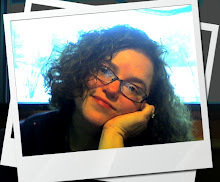
I, Rebecca, am an English instructor who writes murder mystery parties, science fiction, and has revised hundreds upon hundreds of (other people's) resumes.


Who are the professional flamingos that you work with?

Sunday, April 27, 2008

Creativity in the Workforce


Important Words on Creativity . . .

"Creativity will provide the discoveries, inventions, innovations, and improvements that will fuel global economic growth. Creativity will be needed by us to overcome the national economic problems that we find ourselves in, to face ever increasing worldwide competition, and to meet the challenge of a time of rapid innovation. We must become students of the future so that we may plan to meet these challenges. We must be sensitive to the present so that we may be able to detect those factors that will have a bearing on our future. And we must be willing to change; to move our interests to that which gives us the highest return for our investment, keeping in mind at all times the broadest definition of ourselves."


"This is imperative in a time of change for it is only within broad concepts that we can adapt to change. Von Fange wrote in Professional Creativity, 'to make creative contributions, as Einstein indicated, requires that one always search for what is fundamental. Or, to phrase it another way, if buggy-whip people had realized that they were not in the business of making high quality buggy whips, but rather in the business, fundamentally, of stimulating further output from the prime mover of the family conveyance, their factories would not now be gaunt skeletons upon the American industrial scene.' History is full of examples of companies and industries, which did not react to change. No stage coach company became a railroad company. No buggy producer succeeded in the auto business. No railroad or bus company entered the airline business."

"Creativity seems to be inherent in our nature. We are created creative. We lose some of our creative talents as we age due to the boundaries that society puts around us or that we put around ourselves. To be creative sometimes requires that we breakdown these boundaries. Anyone can be creative. To profess that you cannot create is to set a goal you will certainly achieve. Creativity is elemental to all change whether it be discovery, invention, innovation, or improvement."


Source: The Innovation Road Map Travelogue, Observations on the journey to innovation.
Saturday, August 28, 2004, Creativity and the Future. Retrieved 4/28/08 from http://www.theinnovationroadmap.com/Travelogue/2004_08_01_archive.html

Women in the Workforce

It is no secret that Professional Flamingo, Inc. is interested in advancing the skillset and marketability of women in the workforce.

Here's why:

In 2007, Women comprised 46% of the total U.S. labor force and are projected to account for 47% of the labor force in 2016.

Women are projected to account for 49% of the increase in total labor force growth between 2006 and 2016.

A record 68 million women were employed in the U.S.--75% of employed women worked on full-time jobs, while 25% worked on a part-time basis.

Women accounted for 51% of all workers in the high-paying management, professional, and related occupations. They outnumbered men in such occupations as financial managers; human resource managers; education administrators; medical and health services managers; accountants and auditors; budget analysts; property, real estate, and social and community association managers; preschool, kindergarten, elementary, middle, and secondary school teachers; physical therapists; and registered nurses.

Source: U.S. Department of Labor, Bureau of Labor Statistics, Employment and Earnings, 2007 Annual Averages and the Monthly Labor Review, November 2007. Retrieved 4/27/08 from http://www.dol.gov/wb/stats/main.htm

Wednesday, April 16, 2008

be like the flamingo . . .

Professional Flamingo, Inc.

About the flamingo:

The flamingo is a colorful, graceful, and gorgeous bird. Some may think its elongated body and extreme color are entirely for show, but this is not so. Flamingoes are long-lived birds, having adapted to strange and sometimes harsh settings. There is purpose and reason behind the flamingo. Its long legs allow it to wade into perfect feeding areas. Its strong beak allows it to eat from a variety of food sources. It has adapted to both fresh and saltwater living, and it derives its unique color from the food that it eats.


Like the flamingo, professionals in the 21st Century must also be strong, long-lived, adaptable, and colorful. We must take on the characteristics of our clients, of our coworkers, of our audience. We must adapt ourselves to harsh and changeable working environments. We must wade in where others fear to tread.


Be a Professional Flamingo. Use our services today!
All rights reserved. ©2008. Professional Flamingo, Inc.